
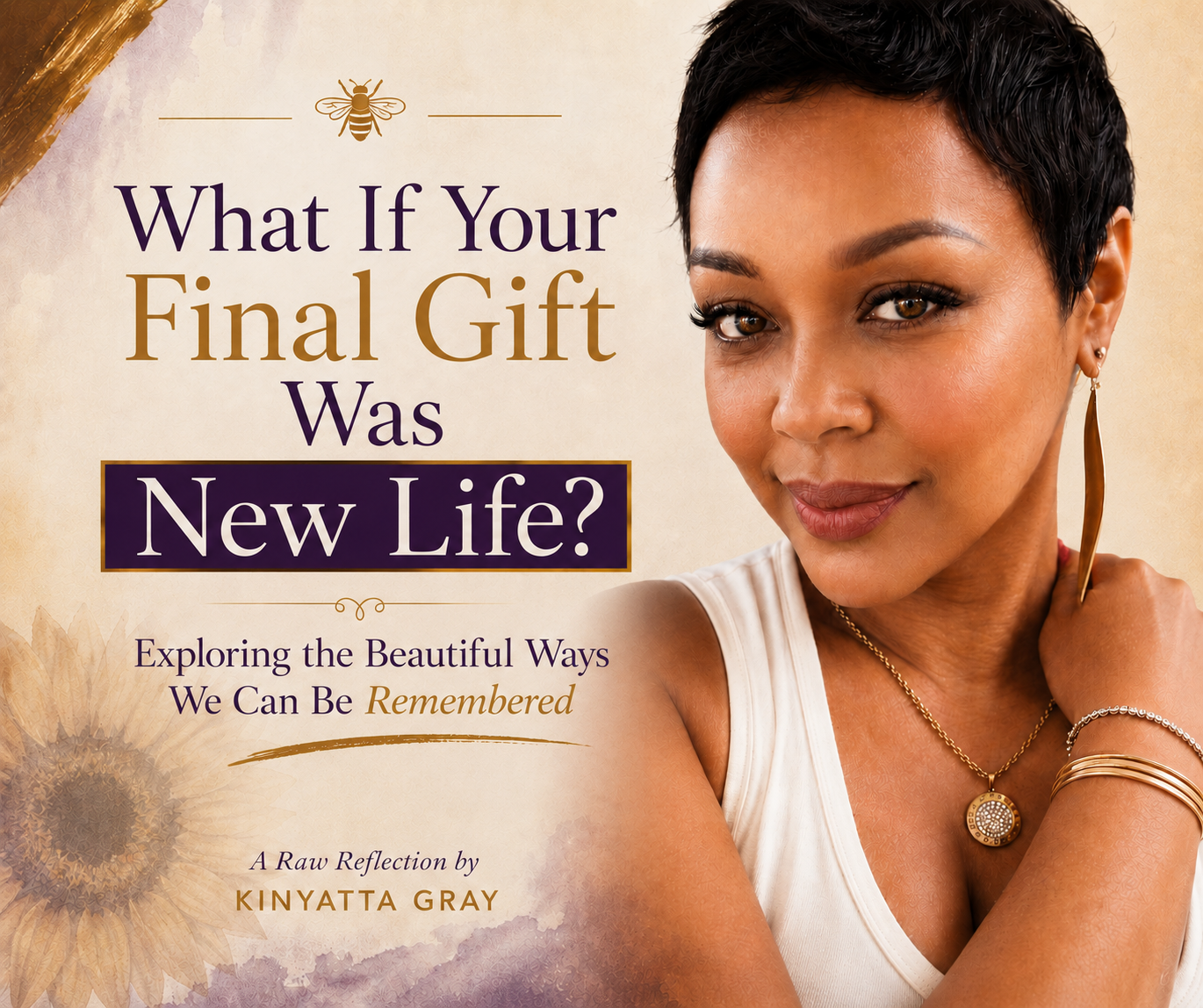
What If Your Final Gift Was New Life? Exploring the Beautiful Ways We Can Be Remembered
There are certain conversations most of us spend a lifetime avoiding.
Death is one of them.
Perhaps that is because talking about the end of life somehow makes it feel closer than we are ready for.
Or perhaps it is because imagining a world without the people we love feels almost impossible.
Yet one day, every family is faced with a question they never wanted to answer.
How do we honor someone we love after they are gone?
For generations, the answer has often been the same. Families have chosen a traditional burial or cremation, placing their loved one in a cemetery or keeping their ashes in a meaningful place.
Those choices remain deeply personal and profoundly beautiful.
Today, however, more people are discovering that there are other thoughtful ways to honor a life. These choices are not about replacing tradition. They simply offer additional possibilities for those who find comfort in them.
At the heart of every option is the same desire.
To love well.
To remember well.
To honor a life with intention.
Returning to the Earth
One of the newer options available in some states is called Natural Organic Reduction, which many people also know as human composting. You may also hear the name Terramation®, which is the name of one organization that offers this service.
At first, the words may sound unfamiliar or even surprising. Many people have the same initial reaction.
Then they learn what it actually is.
The body is placed in a carefully designed vessel with natural materials such as straw, wood chips, and alfalfa. Over several weeks, naturally occurring microbes gently transform the body into nutrient rich soil through the same life giving processes that have existed in nature for thousands of years.
Families may choose to use that soil to nourish forests, conservation land, gardens, or other meaningful places.
For many people, the thought is incredibly comforting.
Their final gift becomes new life.
A Tree That Carries Their Story
Some families choose biodegradable urns that allow cremated remains to become part of a memorial tree.
Imagine children playing beneath its branches.
Imagine grandchildren sitting in its shade years from now, hearing stories about the person whose love helped that tree grow.
Every spring, new leaves become quiet reminders that love never truly stops growing.
For some families, there is deep healing in that image.
Returning Naturally Through Green Burial
Others are choosing what is known as a green burial.
Instead of embalming chemicals and elaborate caskets, the body is wrapped in a natural burial shroud or placed in a biodegradable casket before being laid to rest in a conservation cemetery.
The earth is allowed to do what it has always done.
It welcomes us home.
Many people are drawn to the simplicity and peace that comes with allowing nature to complete life's final chapter.
Becoming Part of the Ocean
Some cremated remains are combined with environmentally safe materials to create memorial reefs that are placed beneath the ocean's surface.
Over time, coral begins to grow.
Fish make their homes there.
Entire ecosystems begin to flourish.
There is something beautiful about knowing that even in death, life continues to bloom in another form.
Diamonds, Art, and Meaningful Keepsakes
Not every memorial is rooted in nature.
Today, some families choose to transform a small portion of cremated remains into laboratory created diamonds, handcrafted glass artwork, pottery, jewelry, or other treasured keepsakes.
These pieces become gentle reminders of a life that mattered and a love that still remains.
Sometimes comfort comes from simply being able to hold a tangible reminder of someone whose presence changed your life forever.
Water Cremation
Another option becoming more widely available is alkaline hydrolysis, often called water cremation.
Instead of using fire, this process uses water, gentle heat, and an alkaline solution to return the body to its natural elements while producing a smaller environmental footprint than traditional flame cremation.
For families who value environmental stewardship, this can be another meaningful option to consider.
There Is No Right Way to Love Someone
If there is one thing grief has taught me, it is this.
Love cannot be measured by the method we choose after someone dies.
A traditional burial is beautiful.
Cremation is beautiful.
A green burial is beautiful.
Natural Organic Reduction may feel beautiful to another family.
Each decision reflects different beliefs, traditions, values, and hopes.
None of them changes the depth of the love that existed.
What matters most is that our choices reflect the life of the person we are honoring and bring peace to the people who will carry their memory forward.
Perhaps that is why conversations like these matter.
Understanding our options gives us the opportunity to make thoughtful decisions before our loved ones are asked to make them during one of the hardest seasons of their lives.
It allows our families to honor our wishes with confidence instead of wondering what we would have wanted.
In the end, perhaps the most beautiful truth is this.
Whether someone rests beneath a headstone, becomes part of a quiet forest, helps restore an ocean reef, grows into the roots of a beloved tree, or is remembered through a treasured keepsake, their greatest legacy was never where they were laid to rest.
Their greatest legacy was the love they planted in the hearts of the people they left behind.
That love continues to grow. Always.
~Kinyatta