I Know Talking About It Makes You Squirm
I see you flinching.
You do not have to pretend you are not. The moment someone starts talking about the death of a mother, really talking about it, something happens in the room. Eyes shift. Throats clear. The conversation pivots toward something more comfortable. Something that does not require anyone to sit with the reality that the women we love most are not permanent.
I understand it. I do not hold it against you.
But I want to talk about why it happens and why I refuse to participate in the flinching anymore.
Talking about my mother's death is the only thing that makes me feel truly alive. And I will not apologize for that not to the uncomfortable, not to the unprepared, not to anyone.
The Three Kinds of People In The Room
When I talk about losing my mother I can always identify three kinds of people in the room.
There is the person whose mother is still alive and who believes, somewhere in the superstitious corner of their mind, that talking about a mother's death will somehow accelerate the arrival of their own. As if grief is contagious. As if saying the words out loud invites the thing they fear most to come knocking. So they change the subject. They redirect. They love their mothers desperately and cannot bear to imagine a world without her.
I see you. And I understand you more than you know.
There is the person who has already experienced it and made a private vow never to speak of it again. The loss was too enormous. The grief too consuming. The only way to continue functioning was to build a wall around the wound and agree never to examine it publicly. They have survived by not speaking. And the idea of someone speaking freely about what they have locked away feels like a threat to the survival strategy that has been keeping them upright.
I see you too. And I honor the way you have carried it.
And there is the person who is anticipating it, whose mother is aging, or ill, or simply human and for whom the thought of that specific loss is so unbearable that they cannot allow it to take shape in their mind. They live in the space just before grief. The anticipatory ache. The holding on. The desperate bargaining with time.
I see all three of you. I have been two of you. And I am writing this for every single one of you.
I have never once believed that talking about death speeds it up. But I have come to believe that refusing to talk about it speeds up something else the slow erosion of connection with the people we love most while they are still here.
What Happens When We Do Not Talk About It
We lose time.
We spend the years our mothers are alive avoiding the conversations that matter most because those conversations require us to acknowledge that the time is finite. We do not ask them about their lives before we were in them. We do not ask what they are proud of. We do not ask what they wish they had done differently. We do not tell them what they mean to us in the specific, unhurried, complete way that the truth deserves.
And then one day, suddenly or slowly, expectedly or not… they are gone.
And we are left holding all the things we never said. All the questions we never asked. All the conversations we redirected because the alternative required us to sit with something uncomfortable.
I know this from the inside. Not because I did not love my mother enough to have those conversations. But because even a deeply bonded relationship can carry the unspoken weight of things we assumed we would have more time for.
My mother died on October 21, 2018. And I have spent eight years wishing I had talked about it more, the mortality, the finite nature of her, the miracle of her specific and irreplaceable presence while she was still here to hear me say it.
The conversations we avoid about death are rarely about death. They are about love and our terror of losing it. But avoiding the conversation does not protect the love. It just leaves it unspoken.
Why I Cannot Stop Talking About It
Here is the thing I need you to understand about why I talk about my mother's death the way I do -- freely, specifically, without apology, in public, in my music, in my products, in every piece of content I create.
It is not performance. It is not trauma processing for an audience. It is not content strategy, though it has become that too.
It is the difference between being alive and disconnected — and being alive and connected.
Those are not the same thing. And the distance between them is everything.
Alive and disconnected would mean existing in the world without her — going through the motions, building the brand, showing up for my family, tending my garden — but doing all of it behind a wall that keeps her memory at a safe and manageable distance. That version of alive feels, to me, like a slower and quieter version of the death I am trying to survive.
Alive and connected means carrying her into every room I enter. It means saying her name — Beverly E. Carroll, Miss Bee — out loud and often. It means writing songs about her and creating products in her honor and building a brand that exists because she existed. It means talking about her death not to dwell in the loss but to maintain the living thread of connection that does not require her physical presence to remain real.
Talking about her death keeps her alive in the only way available to me now.
And I will not give that up for anyone's comfort.
There is a difference between being alive and disconnected and being alive and connected. One is survival. The other is living. I choose living. Even when it makes the room uncomfortable.
What I Want To Say To Each Of You
To the person whose mother is still alive —
Call her. Not tomorrow. Today. Not to have the conversation about mortality — you do not have to go there if you are not ready. Just to hear her voice. Just to tell her one specific true thing about what she means to you. Let the conversation be ordinary. Ordinary is its own kind of sacred when you understand how quickly it can become a memory.
And when you are ready — when the fear loosens just enough — consider asking her something you have never asked. About her life before you. About what she hopes for. About what she wants to be remembered for. You will not regret having asked. You may deeply regret not having.
To the person who has survived it and made a vow of silence —
I honor your survival strategy completely. You did what you had to do to stay standing. There is no wrong way to survive the unsurvivable.
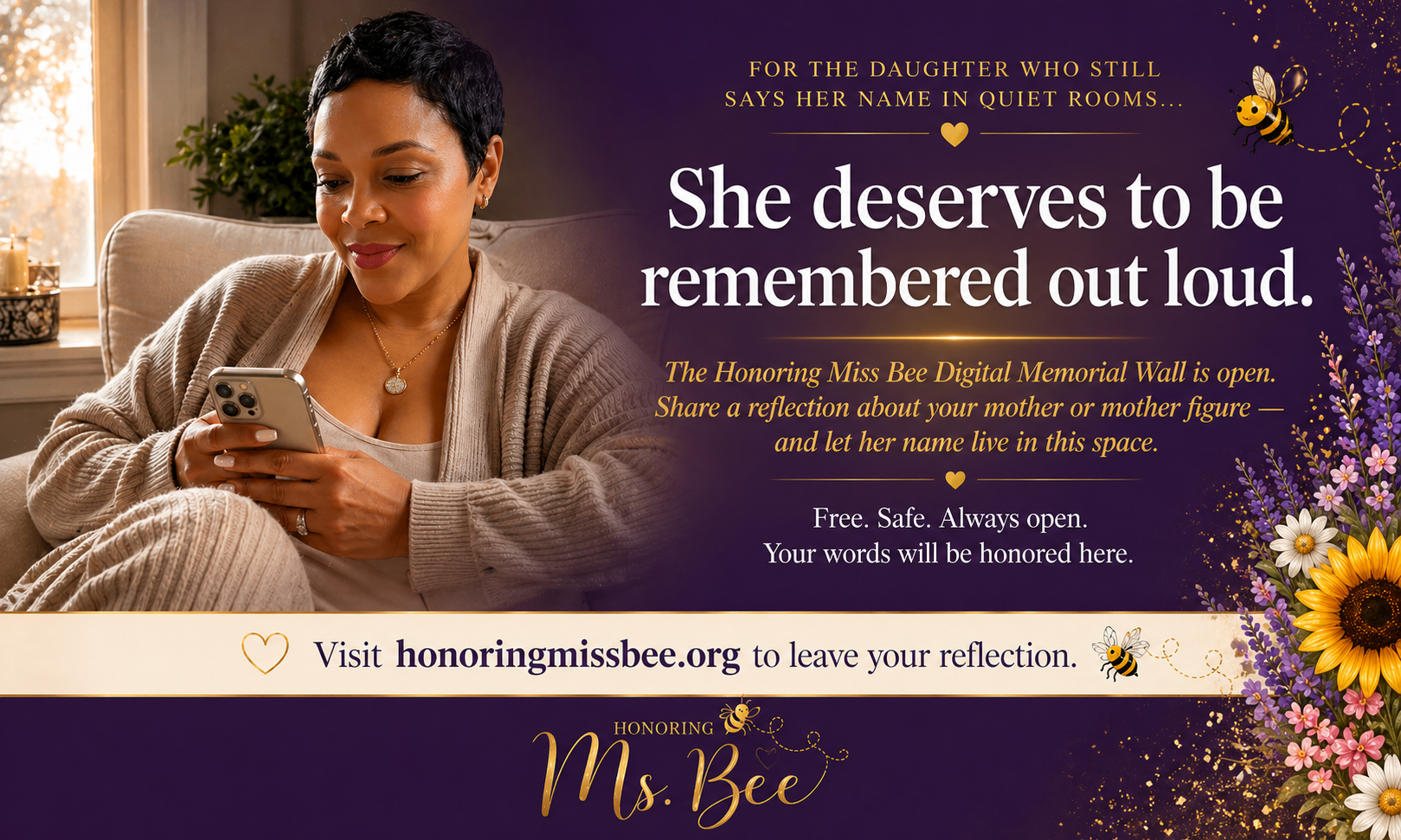
But I want you to know that when you are ready — if you are ever ready — talking about it will not break you. It might actually be the thing that begins to put you back together. Not because grief needs to be spoken to be processed. But because your mother deserves to be spoken of. Her name deserves to be in the air. Her life deserves to be remembered out loud by the person who knew her best.
You do not owe anyone your grief. But you might owe yourself the relief of not carrying it entirely in silence.
To the person who is anticipating it —
I know the thought of it is unbearable. I know you cannot let your mind go there for more than a moment before something inside you slams the door shut.
That is love protecting itself. It is completely human.
But I want to gently offer this — the anticipation of losing her is not the same as losing her. You have not lost her yet. And every day you have with her that you spend avoiding the reality of her mortality is a day you could spend more fully present with the miracle of her existence.
She is still here. That is everything. Treat it like it.
Why I Will Never Stop
My mother wanted to be a published author. She wrote her whole life. She never got to hold her own book.
I published my first book in her honor.
She wanted to meet my grandson. She died four months before he arrived.
I look for her in his face every single time I hold him.
She wanted to see what her daughter would become.
I am still becoming. And I talk about her death because talking about it is how I stay in relationship with the woman whose absence shapes every single thing I build.
Talking about it is how I keep the connection alive in the only way left available to me.
It is how I stay alive and connected rather than alive and gone.
And I will not stop. Not for the uncomfortable. Not for the unprepared. Not for anyone.
Miss Bee deserves to be spoken of. Loudly. Specifically. Unapologetically. For the rest of my life.
About The Author
Kinyatta E. Gray is a bestselling author, grief educator, and 2023 Remarkable Women Award winner. She is the founder of Honoring Miss Bee LLC — a grief healing brand created after losing her mother, the late Beverly E. Carroll, in 2018. She talks about her mother's death freely, specifically, and without apology. She believes that is the most honest thing she can do with the years she has left.
honoringmissbee.etsy.com | Podcast: Grieving Unapologetically | Music: Music In Stilettos
If this made you think of your mother
go call her. Right now. Before you read anything else.
And if she is gone say her name out loud.
She deserves to be spoken of. 🐝